How To Maximize Top 7 Credit Card Benefits for Everyday Use
- 15 Jun 2026
- Kuvik Loans
- Credit Cards
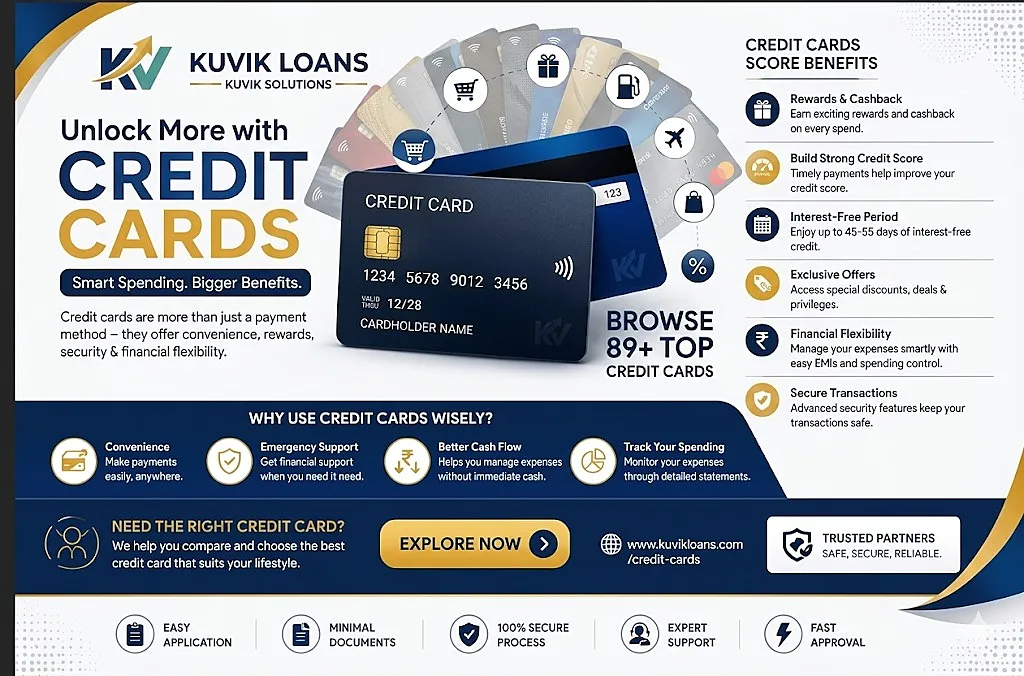
You walk into your favorite store, pick up all your stuff, reach the payment counter, and pay with just a swipe of your card, without hassling with counting and managing cash. Sounds convenient, right? This was made possible with a credit card. In today's fast-paced digital world, managing expenses efficiently is more important than ever. Whether you're shopping online, booking travel tickets, handling emergency expenses, or making everyday purchases, a credit card can be a valuable financial tool when used responsibly.
Despite their widespread popularity, many people still have questions about how credit cards work, their benefits, and whether they are the right financial product for them. In this guide, we'll explain everything you need to know about credit cards, including their features, benefits, uses, and tips for responsible usage.
What Is a Credit Card?
A credit card is a financial instrument issued by a bank or financial institution that allows you to borrow money up to a pre-approved credit limit for purchases, bill payments, and other transactions.
Unlike a debit card, which deducts money directly from your bank account, a credit card allows you to spend first and repay later. The issuer pays the merchant on your behalf, and you repay the amount either in full or through monthly installments, depending on the card terms. Each credit card comes with a credit limit, which is the maximum amount you can spend using the card. This limit is determined based on factors such as your income, credit history, repayment capacity, and financial profile.
How Does a Credit Card Work?
A credit card works by providing you with access to a pre-approved line of credit that you can use for purchases, bill payments, online transactions, and other eligible expenses. Instead of paying from your bank account immediately, the card issuer pays the merchant on your behalf, and you repay the amount later according to the card's billing cycle.
Every credit card comes with a credit limit, which is the maximum amount you can borrow at any given time. As you make transactions, the available credit decreases. Once you repay the outstanding amount, your available credit is restored, allowing you to use the card again.
For example, if your credit card has a limit of ₹1,00,000 and you spend ₹25,000, your remaining available credit becomes ₹75,000. After repaying the ₹25,000, your full credit limit is available once again.
At the end of each billing cycle, typically every month, the credit card issuer generates a statement that provides a detailed summary of your card activity. This statement generally includes:
● Total amount spent during the billing cycle
● Outstanding balance payable
● Minimum payment due
● Payment due date
● Available credit limit
● Interest charges, if any
● Rewards or cashback earned during the period
Once you receive your statement, you have multiple repayment options depending on your financial situation.
Pay the Full Amount
The most financially beneficial option is to pay the entire outstanding balance before the due date. By doing so, you can take full advantage of the card's interest-free credit period and avoid interest charges altogether.
Paying your balance in full also demonstrates responsible credit behavior, which can positively impact your credit score and improve your eligibility for future loans and credit products.
Pay the Minimum Amount
If you're unable to pay the full outstanding balance, you can choose to pay the minimum amount due specified in your statement. This helps keep your account in good standing and prevents late payment penalties.
However, the unpaid balance is carried forward to the next billing cycle, and interest is usually charged on the remaining amount. Over time, relying solely on minimum payments can significantly increase the total cost of borrowing.
Convert Purchases into EMIs
Many credit card issuers offer the option to convert eligible purchases into Equated Monthly Installments (EMIs). This feature is particularly useful for high-value expenses such as electronics, appliances, travel bookings, medical expenses, or home furnishings.
Instead of paying the entire amount at once, the purchase can be repaid over a fixed tenure through manageable monthly installments. This provides greater financial flexibility and helps users manage larger expenses without putting excessive pressure on their monthly budget.
Key Benefits of a Credit Card
Credit cards are designed to offer convenience, flexibility, security, and financial control. Understanding their key features can help cardholders make the most of their credit facilities.
1. Pre-Approved Credit Limit
One of the primary features of a credit card is the pre-approved credit limit assigned by the issuer. This limit is determined based on factors such as income, employment profile, repayment history, and creditworthiness.
The credit limit represents the maximum amount that can be spent using the card. Responsible usage and timely repayments may also make you eligible for future credit limit enhancements, providing greater purchasing power when needed.
2. Interest-Free Credit Period
A major advantage of using a credit card is the interest-free period offered on purchases. Depending on the card and billing cycle, this period can range from approximately 20 to 50 days.
During this time, cardholders can use the issuer's funds without paying interest, provided the full outstanding balance is repaid before the due date. This feature effectively allows users to manage short-term cash flow requirements while avoiding borrowing costs.
3. Contactless Payments
Modern credit cards often come equipped with contactless payment technology, enabling users to make quick and secure transactions by simply tapping their card on a compatible payment terminal.
This feature eliminates the need to swipe the card or enter a PIN for smaller transactions, making payments faster and more convenient while maintaining strong security standards.
4. Online and Offline Usage
Credit cards offer exceptional versatility and can be used across a wide range of payment channels. Whether shopping at retail stores, dining at restaurants, booking travel tickets, paying utility bills, or purchasing products online, credit cards provide a seamless payment experience.
Most major credit cards are accepted globally, making them a convenient payment option for both domestic and international transactions.
5. Reward Programs and Cashback Benefits
Many credit cards come with attractive rewards programs that allow cardholders to earn benefits on their everyday spending. Depending on the card type, users may earn:
● Reward points on purchases
● Cashback on selected spending categories
● Airline miles for travel expenses
● Shopping vouchers and gift cards
● Dining and entertainment discounts
● Exclusive partner offers
These rewards can help users extract additional value from their regular spending and enhance their overall financial experience.
6. Advanced Security Features
Credit card issuers invest heavily in security technologies to protect users from fraud and unauthorized transactions. Common security features include:
● EMV chip technology
● One-Time Password (OTP) authentication
● Real-time transaction alerts
● Fraud monitoring systems
● Card blocking and replacement services
● Secure online payment verification
These measures help ensure that cardholders can transact with confidence both online and offline.
7. Flexible Repayment Options
Credit cards provide multiple repayment options, allowing users to manage their finances according to their needs. Depending on the issuer's offerings, cardholders may choose to pay the full balance, make minimum payments, convert purchases into EMIs, or utilize balance transfer facilities.
This flexibility makes credit cards a practical financial tool for managing both planned and unexpected expenses.
Common Uses of a Credit Card
One of the biggest reasons credit cards have become an essential financial tool is their versatility. Whether you're managing everyday expenses, handling emergencies, or making large purchases, a credit card offers convenience, flexibility, and easy access to funds when you need them most.
Let's explore some of the most common ways people use credit cards in their daily lives.
1) Everyday Purchases - Credit cards make day-to-day spending simple, convenient, and cashless. Instead of carrying large amounts of cash, cardholders can make purchases quickly and securely at stores, restaurants, and service providers.
Common everyday expenses paid using credit cards include:
● Grocery and supermarket shopping
● Utility bill payments
● Fuel purchases
● Dining at restaurants and cafes
● Pharmacy and healthcare purchases
● Household essentials
● Entertainment and leisure activities
Many credit cards also offer cashback, reward points, or discounts on routine spending categories, allowing users to earn additional value from their everyday purchases.
2) Online Shopping
With the rapid growth of e-commerce, credit cards have become one of the most popular payment methods for online transactions. They provide a secure and convenient way to shop from the comfort of your home while enjoying various offers and rewards.
Credit cards can be used for:
● Electronics and gadgets
● Fashion and apparel
● Home décor and furniture
● Beauty and personal care products
● Subscription services
● Food delivery apps
● Digital streaming platforms
Additionally, many card issuers offer exclusive online shopping discounts, cashback promotions, and EMI conversion options, making larger purchases more affordable and manageable.
3) Travel Bookings
Credit cards are widely used for travel-related expenses because they offer convenience, global acceptance, and valuable travel benefits.
Travel-related purchases commonly made using credit cards include:
● Flight tickets
● Hotel reservations
● Holiday packages
● Train and bus bookings
● Cab and ride-sharing services
● International travel expenses
● Car rentals
Many premium credit cards provide additional travel perks such as:
● Complimentary airport lounge access
● Travel insurance coverage
● Air miles and travel rewards
● Priority check-in benefits
● Discounts on hotel and flight bookings
These benefits can significantly enhance the travel experience while helping cardholders save money.
4) Utility Bill Payments
Managing recurring household expenses becomes easier with a credit card. Many service providers accept card payments, allowing users to pay bills conveniently without visiting payment centers or standing in queues.
Common utility payments include:
● Electricity bills
● Water bills
● Gas bills
● Mobile recharges
● Broadband and internet services
● DTH subscriptions
● Insurance premiums
Many credit cards also support automatic bill payment features, ensuring bills are paid on time and reducing the risk of missed payments or service interruptions.
5) Education Expenses
Education is an important investment, and credit cards can help manage educational expenses when immediate funds are required.
Credit cards are often used for:
● School and college fees
● Tuition payments
● Online learning platforms
● Professional certification programs
● Skill development courses
● Educational software and study materials
● Examination fees
For larger educational expenses, eligible transactions may be converted into EMIs, allowing families to spread payments over several months and better manage their budgets.
6) Medical Expenses
Healthcare emergencies can arise unexpectedly, often requiring immediate financial support. In such situations, a credit card can serve as a valuable backup payment option.
Medical expenses that can be paid using a credit card include:
● Doctor consultations
● Diagnostic tests
● Medicines and pharmacy purchases
● Emergency treatments
● Hospital admissions
● Surgical procedures
● Dental and specialized healthcare services
The ability to access funds instantly can provide peace of mind during emergencies when quick action is critical.
7) Emergency and Unexpected Expenses
Life is unpredictable, and unexpected expenses can occur at any time. Whether it's a sudden vehicle repair, urgent travel requirement, home maintenance issue, or unforeseen personal expense, a credit card can help bridge short-term financial gaps.
Having access to a credit card ensures you can address urgent situations immediately while arranging your finances for repayment later.
8) Large Purchases Through EMI Options
Many people use credit cards to purchase high-value items and convert the cost into affordable monthly installments.
Common examples include:
● Smartphones and laptops
● Home appliances
● Furniture
● Electronics
● Fitness equipment
● Vacation packages
EMI conversion allows cardholders to enjoy the benefits of ownership immediately while spreading payments over a convenient tenure.
Responsible Credit Card Usage Tips
While credit cards offer convenience and flexibility, using them responsibly is essential to avoid excessive debt and maintain a healthy financial profile. Good credit habits can help you maximize benefits while protecting your long-term financial well-being.
✔ Pay Bills on Time
One of the most important credit card habits is making payments before the due date. Timely payments help you:
● Avoid late payment penalties
● Prevent additional interest charges
● Maintain a positive credit history
● Improve your credit score
Setting up payment reminders or automatic payments can help ensure you never miss a due date.
✔ Pay the Full Outstanding Balance
Whenever possible, aim to pay your entire statement balance rather than only the minimum amount due.
Paying the full balance allows you to:
● Avoid interest charges
● Benefit from the interest-free credit period
● Reduce overall borrowing costs
● Maintain better control over your finances
Carrying outstanding balances month after month can significantly increase the total cost of your purchases.
✔ Stay Within Your Credit Limit
Although your credit card provides access to a certain spending limit, it is advisable not to use the entire available limit regularly.
Financial experts often recommend maintaining a low credit utilization ratio. Keeping your spending well below your credit limit can:
● Improve your credit score
● Demonstrate responsible credit behavior
● Increase eligibility for future loans and credit products
Using too much of your available credit may indicate financial stress to lenders.
✔ Monitor Your Transactions Regularly
Regularly reviewing your credit card activity helps you stay informed about your spending habits and identify any unauthorized transactions quickly.
Make it a habit to:
● Check monthly statements carefully
● Review transaction alerts
● Verify online purchases
● Report suspicious activity immediately
Most card issuers provide mobile apps and real-time notifications that make monitoring your account easier than ever.
✔ Avoid Impulse Spending
The convenience of a credit card can sometimes encourage unnecessary purchases. It's important to distinguish between wants and needs before making a transaction.
Before using your credit card, ask yourself:
● Is this purchase necessary?
● Can I comfortably repay this amount?
● Will this affect my monthly budget?
Using your credit card thoughtfully can help prevent unnecessary debt and improve financial discipline.
✔ Understand the Terms and Charges
Every credit card comes with specific terms and conditions that cardholders should understand before using the card extensively.
Pay attention to details such as:
● Interest rates
● Annual membership fees
● Processing fees
● Late payment penalties
● Cash withdrawal charges
● Foreign transaction fees
● EMI conversion charges
● Reward program rules and redemption policies
Understanding these charges helps you make informed financial decisions and avoid unexpected costs.
✔ Use Credit as a Financial Tool, Not Extra Income
A common mistake many cardholders make is viewing their credit limit as additional income. In reality, every rupee spent on a credit card must eventually be repaid. Using credit strategically for planned expenses, emergencies, and financial flexibility can help you enjoy the benefits of credit cards while maintaining long-term financial stability. Responsible credit card usage not only helps you avoid debt but also strengthens your credit profile, opening doors to better borrowing opportunities in the future.
Find the Right Credit Card with Kuvik
Choosing the perfect credit card can be overwhelming with so many options available in the market. From cashback and rewards cards to travel, fuel, lifestyle, and business cards, each card comes with its own set of benefits. The challenge is finding the one that matches your spending habits, financial goals, and eligibility.
That's where Kuvik makes it simple.
At Kuvik, we help you compare and apply for the best credit cards from India's leading banks—all in one place. Instead of visiting multiple websites and filling out lengthy applications, you can explore a wide range of options through a seamless digital experience designed to save you time and effort.
Whether you're looking for a lifetime-free card, exciting cashback offers, travel rewards, fuel savings, or premium lifestyle benefits, Kuvik helps you find a card that works for you.
Apply for Personal Loans Online with Kuvik Loans
Why Apply for a Credit Card Through Kuvik?
✔ Access to 89+ Credit Card Options from Top Banks
✔ Compare Features, Rewards, Fees, and Benefits Side-by-Side
✔ Check Your Eligibility Instantly
✔ Quick and Completely Digital Application Process
✔ Exclusive Pre-Approved Card Offers
✔ Trusted Banking Partners Across India
✔ Fast Approvals and Real-Time Application Tracking
Credit Cards for Every Need
No matter your lifestyle or spending preferences, Kuvik helps you discover the right card:
🎯 Cashback Credit Cards – Earn rewards on everyday spending.
✈ Travel Credit Cards – Enjoy air miles, travel perks, and lounge access.
⛽ Fuel Credit Cards – Save more on fuel expenses and earn fuel rewards.
💼 Business Credit Cards – Manage business expenses efficiently.
🛍 Rewards Credit Cards – Earn points on shopping, dining, and entertainment.
⚡ Lifetime Free Credit Cards – Enjoy credit card benefits without annual fees.
Get Started in Just a Few Clicks
Your next credit card could be waiting for you. Simply enter your details, check your eligibility, compare the best available offers, and apply online, all from the comfort of your home.
Don't settle for the first card you see. Compare smarter, choose better, and unlock benefits that match your lifestyle.
Apply for Your Credit Card Today
Explore top credit card offers from leading banks, discover pre-approved options tailored to your profile, and start your application in minutes.
Check Your Eligibility Now and Find the Best Credit Card for Your Needs with Kuvik.
At a Glance
A credit card is much more than a payment method; it is a versatile financial tool that can help you manage expenses, handle emergencies, build a strong credit profile, and enjoy a range of rewards and benefits. From everyday purchases and online shopping to travel bookings and emergency funding, credit cards offer flexibility and convenience that can support your financial goals. The key to maximizing these benefits lies in responsible usage. Paying bills on time, keeping spending under control, and understanding your card's features can help you enjoy all the advantages while avoiding unnecessary debt. When used wisely, a credit card can become an important part of a healthy financial strategy, providing both convenience and financial confidence.
Need Additional Financial Support? We're Here to Help
While credit cards are useful for managing day-to-day expenses, larger financial needs often require more substantial funding. Whether you're facing an emergency, planning a major purchase, consolidating debt, funding education, or meeting personal goals, Kuvik Loans offer simple and hassle-free lending solutions such as instant personal loan designed to support your financial journey.
Get access to quick approvals, transparent processes, competitive interest rates, and flexible repayment options tailored to your needs. Contact our team today to explore the right loan solution and take the next step toward achieving your financial goals with confidence.
Frequently Asked Questions (FAQs)
1. What is a credit card and how does it work?
A credit card is a financial tool that allows you to borrow money up to a pre-approved credit limit for purchases, bill payments, and other eligible transactions. Instead of paying immediately from your bank account, the card issuer pays on your behalf, and you repay the amount later. At the end of each billing cycle, you receive a statement showing your outstanding balance, minimum payment due, and payment due date.
2. What are the main benefits of using a credit card?
Credit cards offer several benefits, including convenient access to funds, an interest-free credit period, reward points, cashback offers, travel benefits, EMI conversion options, and enhanced payment security. Responsible usage can also help build a strong credit history and improve your credit score.
3. Does using a credit card affect my credit score?
Yes. Responsible credit card usage can positively impact your credit score. Paying bills on time, keeping your credit utilization low, and avoiding missed payments demonstrate good credit behavior. On the other hand, late payments and excessive credit utilization can negatively affect your credit profile.
4. How can I choose the right credit card?
The right credit card depends on your spending habits and financial goals. If you frequently shop online, a cashback card may be suitable. If you travel often, a travel rewards card may offer better value. Before applying, compare features, fees, rewards, eligibility criteria, and benefits of a card on Kuvik Loans to find the best match for your lifestyle and spending needs.
Apply for Personal Loans Online with Kuvik Loans
