Doctor Loan: How to Easily Finance Clinic Setup & Expansion
- 26 Aug 2026
- Kuvik Loans
- Doctor Loan
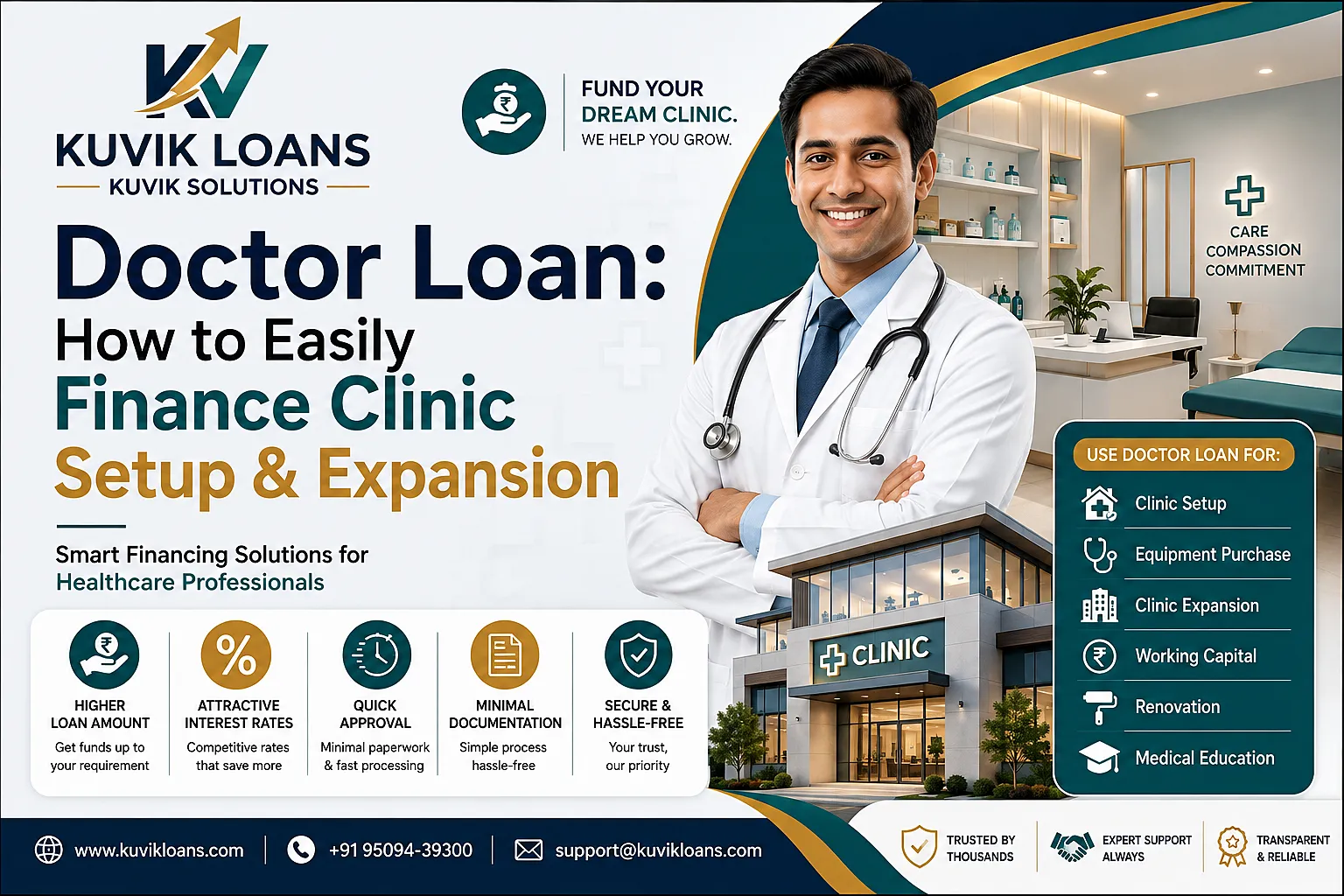
Starting a medical practice is an exciting milestone. But between finding the right location, setting up interiors, purchasing equipment, and managing day-to-day expenses, the financial requirement can become substantial.
Whether you're an MBBS doctor planning your first clinic, a BDS doctor setting up a dental practice, or an MD doctor looking to expand an established healthcare business, having access to the right financing can make the process considerably smoother.
This is where a doctor loan can help.
A doctor loan is a financing solution designed for eligible medical professionals to fund business and professional requirements. Depending on the lender and product, it can be used for clinic setup, medical equipment, renovation, expansion, working capital, and other eligible professional expenses.
Let's understand how a loan for doctors works and how you can use it to build and grow your practice.
What Is a Doctor Loan?
A doctor loan in India is a type of professional financing available to eligible medical practitioners for their professional or business-related requirements.
Unlike a personal loan, which is generally intended for personal expenses, a medical professional loan is structured around the needs of professionals operating a medical practice, clinic, hospital or healthcare establishment.,
Depending on the lender, a professional loan for doctors may help finance:
- New clinic setup
- Clinic renovation
- Medical equipment
- Dental equipment
- Diagnostic equipment
- Furniture and interiors
- Technology and software
- Clinic expansion
- Working capital
- Additional consultation rooms
- Business-related operational expenses
The exact loan amount, interest rate, tenure, collateral requirements, and permitted end use depend on the lender and the applicant's eligibility.
Who Can Apply for a Doctor Loan?
One of the biggest advantages of professional financing is that it can be designed around the specific financial profile of medical practitioners.
Depending on lender criteria, eligible applicants may include:
· MBBS Doctors - A loan for MBBS doctors can help eligible practitioners establish or expand their independent medical practice. For example, an MBBS doctor opening a neighbourhood clinic may need funding for interiors, consultation-room equipment, furniture, computers and initial operating expenses.
· BDS Doctors - A loan for BDS doctors can be useful for setting up or expanding a dental clinic. Dental practices can involve significant equipment costs, including dental chairs, imaging systems, sterilisation equipment and other specialised tools.
· MD Doctors - An MD doctor may require a larger investment when establishing a specialised practice or expanding an existing healthcare facility. Depending on eligibility, financing may be considered for equipment, infrastructure, expansion and working capital requirements.
Other eligible medical professionals may also qualify depending on the lender's policies and professional credentials.
Why Do Doctors Need Specialised Financing?
Healthcare businesses have some unique financial characteristics. A doctor may have strong earning potential but still require substantial upfront capital to establish a practice.
Think about the expenses involved in setting up even a relatively small clinic:
Location → Interiors → Equipment → Technology → Staff → Licences → Marketing → Working Capital
Most of these expenses occur before the clinic reaches its full revenue potential. A suitable doctor business loan can help bridge this initial funding requirement without requiring the doctor to use all their personal savings at once. It can also allow doctors to preserve their own capital for emergencies, investments and other financial priorities.
How Can a Doctor Loan Be Used?
A medical practice can require significant investment at different stages, starting from setting up your first consultation room to purchasing specialised equipment or opening another branch. The good news is that a doctor loan can potentially support several of these professional requirements, depending on the lender's policies and the purpose of the financing. Whether you're starting from scratch or scaling an established practice, understanding where financing can fit into your plans can help you make better financial decisions.
1. Loan for Clinic Setup
Setting up a clinic involves much more than simply finding a suitable location and putting up a signboard. Before you see your first patient, there can be considerable upfront expenses. A loan for clinic setup can potentially help eligible doctors finance expenses such as:
- Interior and civil work
- Consultation rooms
- Reception and waiting areas
- Doctor's furniture and storage
- Electrical and plumbing work
- Air conditioning and lighting
- Computers and networking equipment
- Clinic management software
- Security systems
- Signage and branding
For example, an MBBS doctor opening a neighbourhood general practice may need to invest in consultation furniture, basic diagnostic equipment, interiors, technology, and initial operational expenses. Instead of using a large portion of personal savings for all these costs at once, suitable professional financing can help spread the financial requirement over a structured repayment period. Of course, the expenses that can be financed and the applicable loan terms depend on the lender.
2. Medical Equipment Loan
For many medical professionals, equipment can account for a significant portion of the clinic's initial investment. Depending on your speciality, you may require equipment ranging from basic diagnostic tools to highly specialised medical technology. A medical equipment loan can help eligible doctors finance the purchase of equipment without having to fund the entire cost from their own capital upfront. This can be particularly useful when the equipment is essential for starting or expanding a service.
For instance, a dental practitioner may need dental chairs, imaging equipment or sterilisation systems, while a specialist clinic may require specialised diagnostic or treatment equipment. Before applying, it's worth preparing a clear equipment budget that includes the purchase price, installation, maintenance, and any other associated costs. This gives you a better understanding of the actual amount you need to finance.s
3. Loan for Medical Equipment Upgrades
Your financing needs don't necessarily end once the clinic is operational. Medical technology continues to evolve, and established practices may eventually need to replace outdated equipment, upgrade existing systems, or add new capabilities. A loan for medical equipment can potentially help eligible practitioners fund such upgrades, subject to the lender's assessment.
For example:
- A dental clinic may upgrade its imaging technology.
- A diagnostic centre may add newer testing equipment.
- A specialist clinic may purchase equipment for an additional treatment service.
- An established practice may replace ageing equipment with a newer model.
Upgrading equipment can also help a practice expand the services it offers. However, the investment should ideally be evaluated from a business perspective, considering expected patient demand, additional revenue potential, maintenance costs, and the repayment obligation before taking on additional debt.
4. Doctor Loan for Clinic Expansion
Once a practice becomes established, growth can bring an entirely new set of financial requirements. Perhaps your patient base has grown, and your existing clinic is becoming crowded. Maybe you want to introduce a new speciality or open a second location. This is where a doctor loan for clinic expansion can potentially support eligible growth-related expenses.
A clinic expansion loan may be used, depending on lender policies, towards requirements such as:
- Adding consultation rooms
- Expanding the waiting area
- Renovating or upgrading the existing premises
- Opening another clinic
- Introducing a new speciality
- Hiring additional staff
- Purchasing additional medical equipment
- Upgrading technology and infrastructure
For an established practice, the advantage is that you may already have a track record of patient volumes and revenue. This can help you prepare a more detailed business case for the proposed expansion. For example, suppose your existing clinic has consistently operated at high capacity, and you are turning away patients because of limited appointment slots. Expanding the premises or opening another location could help accommodate additional demand. However, expansion should be based on sustainable demand rather than simply the availability of funding. Your projected revenue should comfortably support the additional operating costs and loan repayment obligations.
5. Working Capital Loan for Doctors
Not every financial requirement involves a building or a piece of medical equipment. Once your clinic is operational, you also have regular expenses that need to be managed regardless of how quickly patient payments come in.
These can include:
- Staff salaries
- Rent
- Electricity and utilities
- Medical consumables
- Inventory
- Equipment maintenance
- Software subscriptions
- Administrative expenses
- Marketing and promotional costs
This is where a working capital loan for doctors may be relevant for eligible applicants. Working capital financing can help manage temporary gaps between your business's expenses and incoming cash flows.
For example, a clinic may have salaries, rent, and supplier payments due at the beginning of the month, while patient collections and other receipts come in throughout the month.
Access to appropriate working capital can help the clinic continue its regular operations without disrupting essential payments. However, working capital borrowing should ideally be used for genuine short-term business requirements rather than becoming a permanent substitute for sustainable cash flow.
What Factors Affect Doctor Loan Eligibility?
Thinking about applying for a loan for doctors? Before submitting an application, it's useful to understand what lenders typically look at. Every lender has its own eligibility criteria, so there isn't one universal checklist. However, several factors commonly form part of the assessment.
1. Professional Qualification
Your professional qualification is naturally an important part of a medical professional loan application.
Depending on the product, lenders may consider professionals such as:
- MBBS doctors
- BDS doctors
- MD doctors
- Other eligible medical professionals
Your professional registration and relevant documentation may also be required to establish your credentials. For example, a loan for MBBS doctors and a loan for BDS doctors may have specific documentation requirements based on the nature of the practice and lender policy.
2. Professional Experience
Your experience can help lenders understand the stability of your professional practice. An established doctor with several years of professional experience and a consistent income history may have a different financial profile from someone who has recently completed their qualification and is setting up their first practice.
For new practitioners, lenders may consider other aspects of the application, such as income, credit history, co-applicant details where applicable, and the overall strength of the proposal.
3. Income and Repayment Capacity
Ultimately, lenders want to understand whether you can comfortably repay the proposed loan. They may evaluate your professional income, clinic revenue, and other regular sources of income, depending on the product.
For an established practice, financial records can provide insight into:
- Revenue
- Operating expenses
- Profitability
- Cash flows
- Existing debt obligations
The important thing is not simply how much you earn, but how much you can reasonably allocate towards the new loan while continuing to meet your other financial commitments.
4. Credit History
Your credit history can play an important role in a doctor loan application in India. A history of paying existing loans and credit card obligations on time can demonstrate responsible borrowing behaviour. On the other hand, frequent missed payments, defaults, or excessive outstanding debt may make lenders more cautious. Before applying, it's a good idea to review your credit report and make sure there are no obvious errors or unresolved overdue accounts.
5. Existing Financial Obligations
Already paying a home loan, car loan, business loan, or another professional loan? That's not necessarily a problem. However, lenders will generally consider your existing obligations when assessing how much additional debt you can comfortably manage. For example, a doctor with a high existing EMI burden may have less repayment capacity available for a new clinic expansion loan. Understanding your existing monthly commitments before deciding on the loan amount can help you avoid over-borrowing.
6. Clinic Financials
If you're already running a clinic, your financial records can provide lenders with a clearer picture of the practice's performance. Depending on the lender and product, you may be asked to provide documents such as:
- Bank statements
- Income Tax Returns
- Financial statements
- Proof of professional income
- Clinic-related business documents
- Existing loan details
Documents You May Need for a Doctor Loan
The loan application process for doctors can require documentation to verify your identity, professional credentials, income, and financial position.
Common documents may include:
- PAN Card
- Aadhaar Card or other KYC documents
- Medical qualification certificates
- Professional registration documents
- Bank statements
- Income Tax Returns
- Proof of professional income
- Clinic registration documents, where applicable
- Business financial statements, where applicable
- Property or equipment documents, depending on the loan
The exact doctor loan documents required will vary according to the lender, loan type, and applicant profile.
Keeping your documents organised before applying can help make the process smoother.
How Much Doctor Loan Can You Get?
There isn't a single loan amount applicable to every medical professional.
The amount you may qualify for depends on factors such as:
- Income
- Professional experience
- Clinic turnover
- Credit profile
- Existing liabilities
- Loan purpose
- Repayment capacity
- Business financial performance
- Lender policies
For example, a doctor setting up a first clinic may have a very different financing requirement from an established practitioner expanding into a larger facility.
Instead of borrowing the maximum amount available, it's generally better to determine the actual project cost and borrow according to your repayment capacity.
How Kuvik Loans Can Help Doctors
At Kuvik Loans, we understand that medical professionals can have very different financing needs. An MBBS doctor setting up a first clinic may need funding for basic infrastructure and equipment, while an established specialist may require a larger facility expansion or equipment upgrade. That's why doctors can explore financing based on their specific requirements, whether it's clinic setup, medical equipment, expansion, or working capital. Instead of treating every requirement the same way, the focus should be on finding a financing structure that aligns with your professional income and repayment capacity.
Planning Your Next Step?
Whether you're a loan for MBBS doctor applicant starting your first practice, a BDS doctor expanding a dental clinic, or an MD doctor investing in a specialised practice, the right financing can help you move forward without putting unnecessary pressure on your existing capital. Explore doctor finance options with Kuvik Loans and find a financing solution suited to your professional goals.
Final Thoughts
Building a successful medical practice requires more than clinical expertise. It also requires thoughtful financial planning. From your first clinic setup to purchasing specialised equipment and expanding into a larger facility, a doctor loan can provide access to capital when you need it. The key is to understand your actual requirement, compare available doctor finance options, evaluate the total cost of borrowing, and choose a repayment structure that works with your professional income. After all, the goal of financing shouldn't simply be to get a loan. It should be to help you build a stronger, more sustainable practice.
Frequently Asked Questions (FAQs)
1. What is a doctor loan?
A doctor loan is a financing option designed for eligible medical professionals to meet professional and business-related financial requirements. Depending on the lender, it can be used for clinic setup, medical equipment, renovation, expansion, technology, or working capital requirements.
2. Who can apply for a doctor loan in India?
Depending on the lender's eligibility criteria, loan for doctors options may be available to qualified medical professionals such as MBBS, BDS, and MD doctors, as well as other eligible practitioners. Professional experience, income, credit history, and existing financial obligations may also be considered.
3. Can I use a doctor loan for setting up a new clinic?
Yes, subject to the lender's terms. A loan for clinic setup may potentially be used for eligible expenses such as interiors, consultation rooms, furniture, technology, electrical work, equipment, and other professional setup requirements.
4. Can doctors get a loan for medical equipment?
Yes. A medical equipment loan can help eligible doctors finance the purchase, replacement, or upgrade of equipment required for their practice. The equipment and permitted usage will depend on the lender's policies.
5. Can I get a doctor loan for clinic expansion?
Yes, eligible doctors may be able to use a clinic expansion loan for requirements such as adding consultation rooms, renovating the clinic, purchasing additional equipment, hiring staff, or establishing another branch. Approval depends on the applicant's financial profile and lender assessment.
6. What documents are generally required for a doctor loan?
Common documents may include KYC documents, PAN, proof of medical qualification and registration, bank statements, Income Tax Returns, proof of professional income, and clinic-related financial documents. The exact doctor loan documents required vary by lender and loan type.
7. How can I improve my chances of getting a doctor loan approved?
You can strengthen your application by maintaining a healthy credit history, keeping your financial and professional documents organised, demonstrating stable income, reducing unnecessary existing debt and choosing a loan amount that matches your repayment capacity. Preparing a clear estimate of your clinic setup or expansion costs can also make your financing requirement easier to evaluate.
